Creator rights
DMCA Free Music: What It Really Means for Creators
DMCA free music is a promise, not a category. Learn the real rights checks, platform risks, and practical ways to use music without copyright strikes in your streams and videos.

Tarun YadavPublished September 22, 2026 · 5 min read · Search intent: informational
The short answer
DMCA free music is not a legally recognized category. It is marketing shorthand for audio that should not trigger copyright takedowns or muting on platforms like Twitch or YouTube. To avoid copyright strikes, you must check who owns both the composition and the recording, and what license covers your use case. Always re-check platform and library terms.
"DMCA free music" sounds simple, but it is marketing, not law. There is no fixed list or certification. Platforms handle claims and muting differently. Rights change over time and by territory, so a safe track today could get flagged tomorrow. This guide explains the real checks you need and the practical paths for streaming safe music without copyright strikes.
If you stream, upload, or publish with background music, you are responsible for copyright clearance. That means checking both who owns the music and what license actually applies on your chosen platform. Automated systems often over-block or miss context. Understanding the rights chain is the only way to reduce copyright strikes and keep streams safe.
Why 'DMCA free music' is not a real category
"DMCA free" is not a legal category or status. It is a marketing claim often used by music libraries and some creators to signal that a track is unlikely to trigger a copyright takedown. But there is no official registry, label, or certification for safe stream music. The DMCA (Digital Millennium Copyright Act) only defines the process for takedown requests.
Each streaming, video, or social platform sets its own rules for handling copyright. A track that is safe on one service could trigger claims or muting on another. Distributors and labels can change their policies or reclaim rights. Even public domain status can be disputed or vary by country. "DMCA free" is not a guarantee-always check the real source and license.
- DMCA is a process, not a type of music
- Platform rules differ and change
- Marketing language is not a legal shield
The two rights that both must be cleared
Every piece of music has two main rights: the composition (songwriting and lyrics) and the sound recording (the actual performance). Both must be cleared for your intended use. Even if a composition is public domain, the recording may not be. A new performance of an old song can still be protected.
Licenses must cover both rights and match your platform and use case. Some "royalty free" or "DMCA safe" libraries only clear one right, leaving you exposed to claims. Always verify license details and what platforms are covered. If you are using AI-generated music, check who owns the output and what license applies.
- Clear both composition and recording rights
- Licenses are use- and platform-specific
- AI music has layered ownership questions
Practical routes to strike-resistant audio
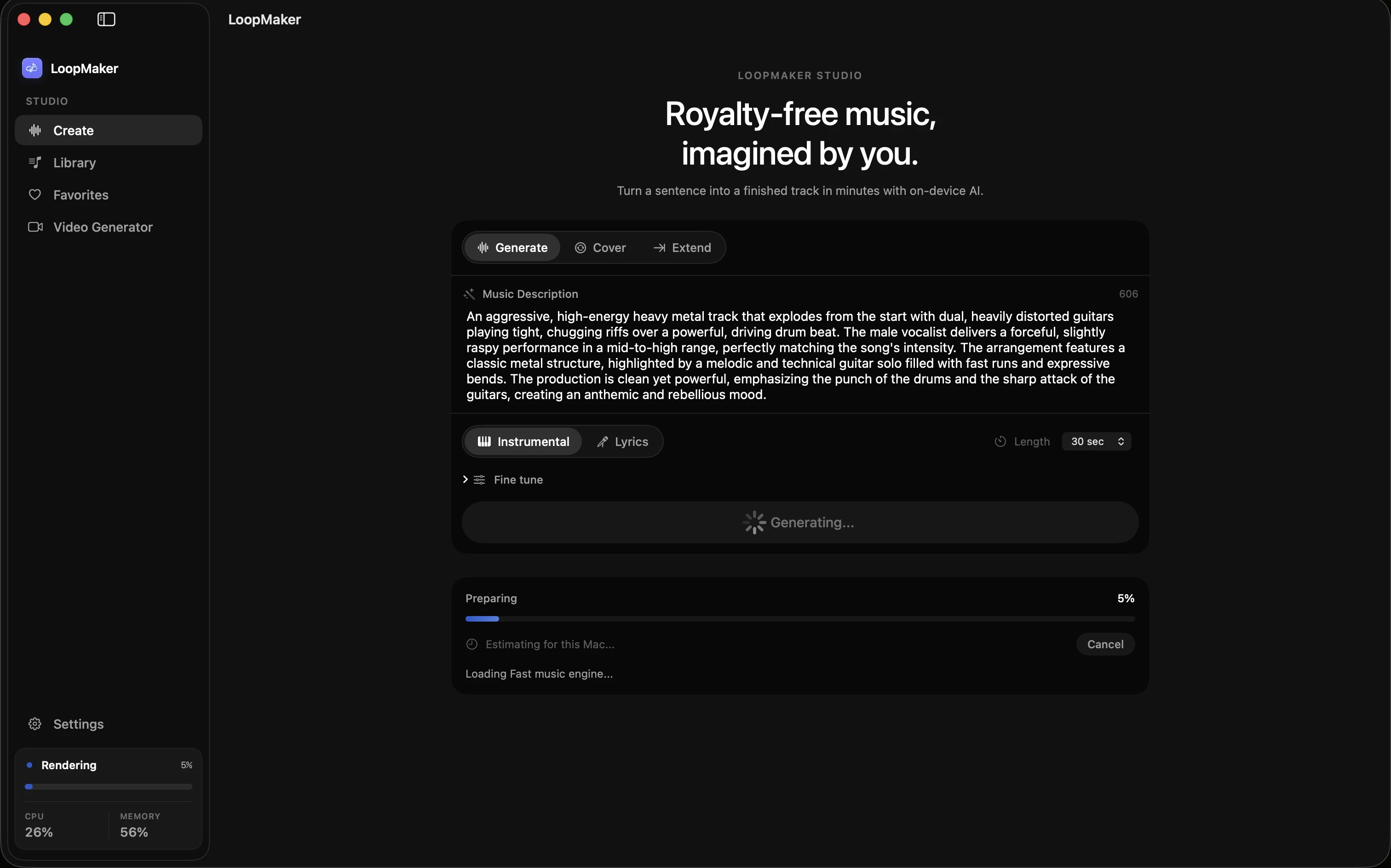
Most creators use one of three practical paths. First, licensed music libraries that grant rights for your platform and use case-read their terms carefully and keep proof. Second, public domain works, which are out of copyright (check local law and source). Third, generate music locally using tools like LoopMaker or other AI/DAW apps, then apply the correct license.
Locally generated music-such as tracks created with LoopMaker-can reduce third-party claims but does not grant automatic immunity. You must still review the terms of your tools and any samples or stems used. Public domain status must be verified for each territory. Always document your sources and licenses.
- Licensed music libraries with clear terms
- Verified public domain recordings
- Locally generated tracks with proper review
A pre-publish rights checklist
Before you stream or upload, run this checklist. One: Identify who owns the composition and recording. Two: Confirm the license or proof of public domain status. Three: Match the license to your platform and use case-commercial, live, archived, etc. Four: Re-check terms regularly, as rights and library policies can change.
Five: Keep documentation (receipts, screenshots, licenses) for every track. Six: Do not use fair use as your main defense; it is limited and often fails to prevent automated strikes. Seven: AI-generated music can still face restrictions from models or stem libraries. Copyright claims may occur later, so ongoing review is required.
- Identify owners and licenses
- Match use to platform terms
- Document everything
Frequently asked questions
Is there truly DMCA-free music?
No, there is no such thing as truly DMCA-free music as a legal category. "DMCA free" is a marketing term. You must always check who owns the composition and recording, and what license or usage rights apply. Safe stream music means you have defensible permission, not immunity. Rights can change, so verify sources and licenses regularly.
How do I check if a track is safe to stream?
Start by identifying both the composition and recording owners. Review the license terms to confirm they apply to your platform (Twitch, YouTube, etc.) and intended use (live, archived, commercial). Save proof of your rights. Re-check license and platform terms before publishing, as both can change. When in doubt, choose another track or source.
Is AI-generated music DMCA free?
AI-generated music is not automatically free of copyright risk. You must check the license terms of the tool and any input data, stems, or samples used in creation. For LoopMaker, refer to the product documentation and site for current terms. Ownership and risk depend on the model, training material, and your use case.
What happens after a copyright strike?
A copyright strike can result in audio muting, takedown, demonetization, or even channel bans, depending on your platform. Most platforms use automated detection, which is not always accurate. You may be able to dispute a strike, but the process is slow and not always successful. Accumulating strikes increases risk of loss of streaming privileges.
Sources and testing notes
- Twitch DMCA and copyright FAQ — First-party explanation of DMCA notices, strikes, and retractions.
- U.S. Copyright Office: Music and copyright — Primary-source explanation that compositions and recordings are separate works.
- U.S. Copyright Office AI report, Part 2 — Primary-source summary of copyrightability principles for AI-generated material.
- Twitch muted-audio appeals — First-party guidance showing automatic VOD muting is separate from copyright strikes.
- LoopMaker product pages and current guardrails — checked September 22, 2026. This entry describes practical starting points, not guaranteed output or rights.
Double-check music rights before you stream
Reduce your risk of copyright strikes by checking music licenses and keeping records. For generation tools like LoopMaker, always review the latest terms and platform rules before publishing.