Creator rights
AI Music Generator Commercial Use: 3 Questions Every Creator Must Ask
Commercial use of AI music means answering three questions: does your tool's license allow it, is the output protectable, and does your release platform approve. Use this checklist to avoid disputes.

Tarun YadavPublished September 29, 2026 · 6 min read · Search intent: transactional
The short answer
Using AI music in commercial projects is possible, but you need to check three things: your AI tool's license terms, the copyright status of the generated output, and the policies of the platform where you will publish or distribute the music. Document your decisions and sources for each project. This helps prevent misunderstandings with clients or collaborators. This is not legal advice-review every tool and platform's actual terms before starting.
Commercial use of AI-generated music starts with three questions. Does your chosen AI music generator permit commercial use? Is the music you generate eligible for copyright or other protection? Does your distribution platform allow AI-generated content in client work? You need to answer all three before you deliver tracks to clients or sync libraries. If any answer is no, you risk takedown or disputes. A checklist and good record-keeping save time and stress.
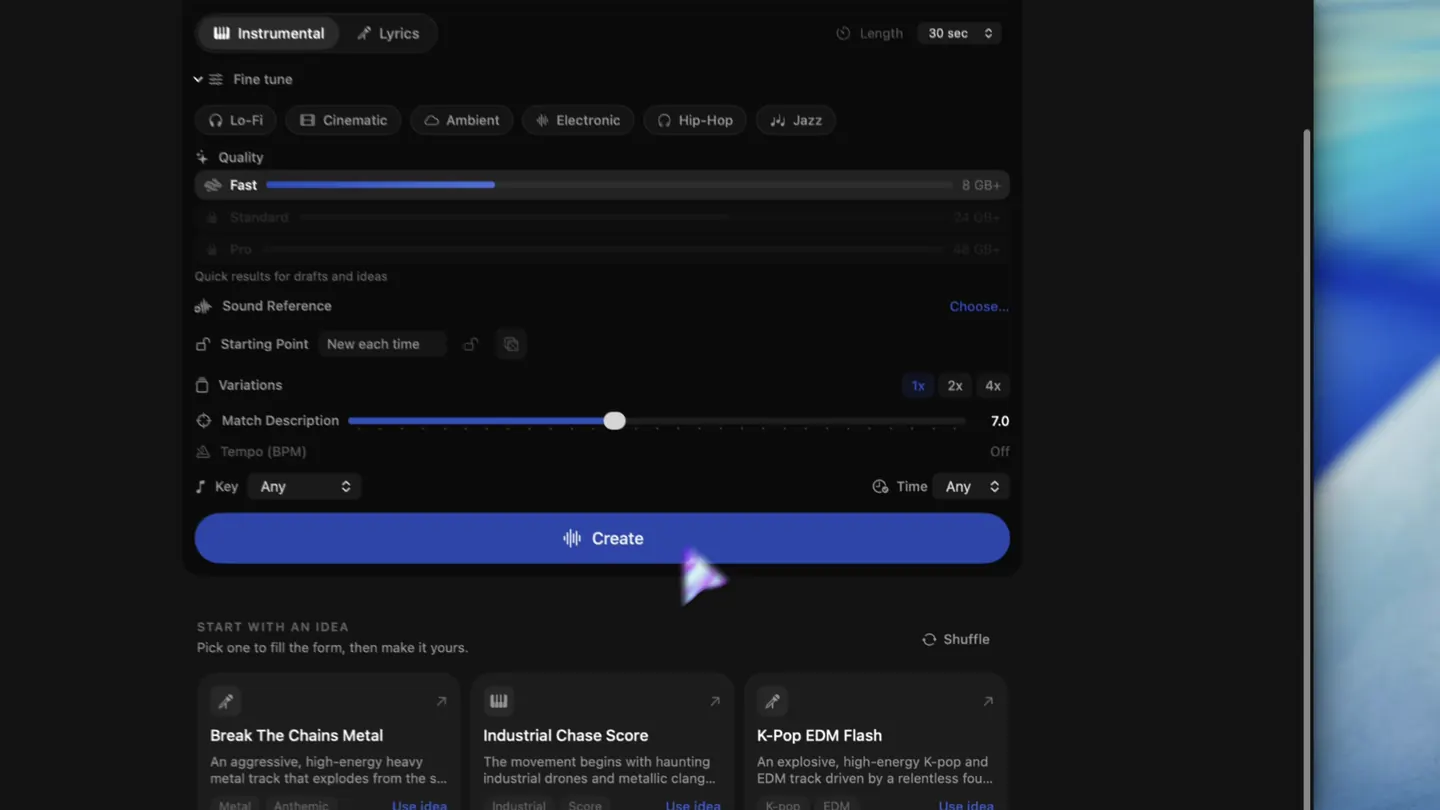
LoopMaker is a native macOS app for Apple Silicon Macs, made for local AI music sketching. Its license, as of June 2024, allows commercial use but not resale of the app or model itself. For projects beyond loops or instrumental beds, always check your platform's latest rules on AI music rights. The US Copyright Office says fully AI-generated tracks are not copyrightable. This affects enforcement, not your right to use them. Standard and lyrics models require 24 GB or more RAM.
Three questions for AI music generator commercial use
Using AI music in a client project is not a single yes-or-no issue. You need to check three separate areas. First, what does your AI music tool's license say about commercial use? Next, is the music output protectable under copyright or another scheme? Last, does your release or sync platform agree with how you plan to use AI music? Each answer affects what you can promise clients.
Treat these checks as a pre-project habit. For example, LoopMaker's license permits commercial outputs, but not all tools do. The US Copyright Office requires human authorship for registration, so if you want copyright protection, you may need to edit or combine AI output with your own work. Platforms like YouTube or music libraries each set their own AI music rules, which change often.
- Tool license scope
- Copyright status of output
- Publishing platform policy
What the tool license grants and excludes
Always review your AI music generator's license before you use its output for clients or commercial projects. Some tools, like LoopMaker, grant a commercial license for generated audio files but prohibit resale of the app or underlying models. Other products limit use to personal projects, or require extra purchase for full rights. Terms can change, especially after a tool leaves beta or adds new models.
Keep a copy of the license from the date you generate your track. If a client asks, you can show exactly what rights you had. Some online generators change their commercial license AI music terms with little notice. Always check if royalty-free means free for all uses, or just for non-client uses. If the license is unclear, ask support or choose another tool.
- Output rights may differ by tier
- Model and app resale is usually banned
- Print or save license terms
Platform policies versus law
Many creators assume that if a tool grants commercial use, platforms will accept AI tracks without issue. This is not always true. Music libraries, streaming sites, and sync agencies each set their own rules for AI music. Some require disclosure of AI content, others ban certain AI sources, and some reject works that cannot be copyrighted. These platform policies can override what the license or copyright law allows.
For example, YouTube and Spotify have both updated their AI music policies since early 2024-check their latest terms before uploading. US law says AI-generated music is not eligible for copyright unless there is significant human input, but this does not stop platforms from accepting or rejecting content based on their own standards. Always get written confirmation of the current policy for your target site or library.
- Platform rules change often
- Disclosure may be required
- Copyright status may affect acceptance
A client-project documentation habit
Building a documentation habit prevents most disputes over AI music rights with clients or collaborators. For each project, save the tool license, proof of the generation date, and any edits you make to the music. Attach platform policy screenshots or emails confirming your use is allowed. This record helps if a client later claims you overstepped the commercial license AI music terms or if a platform questions your right to upload.
Use a single folder per project with clear file names. For LoopMaker, save the app license PDF, the model README, and the exported tracks with timestamps. If you use multiple tools, keep each license and proof of purchase. Add your client contract and any platform approval emails. This habit takes five extra minutes but can save hours in case of a dispute or takedown.
- Save tool and model licenses
- Keep export and edit timestamps
- Store platform or client approvals
Frequently asked questions
Can I use AI-generated music commercially?
Yes, you can use AI-generated music for commercial projects if your tool's license allows it and your distribution platform accepts it. Always check both the tool's terms and the platform's latest policy. LoopMaker's license permits commercial use of exported tracks as of June 2024. This is not legal advice-review current terms on every tool and platform before you deliver to a client.
Do I need to disclose AI music to clients?
Some clients and platforms require you to disclose if music was created with AI. Even if disclosure is not required by law, it is good practice to let clients know about any AI-generated material in their project. This prevents confusion about rights, licensing, and re-use. Always check your client contract and platform policies for disclosure requirements before delivering a track.
Is AI music copyrightable?
In the US, the Copyright Office states that works wholly generated by AI, with no human authorship, are not eligible for copyright. If you substantially edit, arrange, or add new elements, those parts may qualify for protection. This does not stop you from using AI music in commercial work, but it affects your ability to enforce rights if someone copies your track.
What records should I keep for commercial projects?
Keep the AI tool's license, proof of model and app purchase, timestamps for each generation, your client contract, and copies of platform or client approval emails. Save documentation of any edits you make to the music. Store everything in a single project folder. This record helps resolve any disputes about your right to use or distribute the music.
Sources and testing notes
- U.S. Copyright Office AI report, Part 2 — Primary-source summary of copyrightability principles for AI-generated material.
- U.S. Copyright Office: Music and copyright — Primary-source explanation that compositions and recordings are separate works.
- LoopMaker terms — Product-specific permission and output-language boundary.
- Google helpful content guidance — Search guidance on first-hand value, authorship, and audience fit.
- LoopMaker product pages and current guardrails — checked September 29, 2026. This entry describes practical starting points, not guaranteed output or rights.
Stay Clear on AI Music Rights
For every commercial AI music project, run the three-question checklist and keep clear records. Protect yourself, your clients, and your work with accurate documentation. Check every tool and platform's terms before you deliver.